Commercial Epoxy Flooring in Palm Beach County — Estate-Grade Finish, Coast-Rated
Seamless, salt-air-rated epoxy floors for Palm Beach County boutiques, waterfront restaurants, clubhouses, showrooms, and medical suites — from Worth Avenue and Clematis Street to PGA Boulevard and Atlantic Avenue. Installed around your hours, finished to the standard your clientele expects.
A Floor That Holds Up to the Coast — and to a Discerning Clientele
On the Palm Beach County coast, a commercial floor has two jobs at once. It has to survive what salt air, tracked-in sand, beachfront foot traffic, and daily wash-downs throw at it — and it has to look the part for a customer base that notices finish quality. A scuffed, peeling, or yellowed floor reads as deferred maintenance to a clientele that has seen the inside of every showroom on Worth Avenue. Seamless commercial epoxy solves both: a poured, monolithic surface with depth and gloss that photographs well, over a coating system engineered to take the abuse a busy oceanfront business hands it.
Salt air is the quiet differentiator here. Buildings within a few miles of the Atlantic and the Intracoastal carry a higher chloride and humidity load than inland slabs, and that environment is unforgiving to coatings that were never specified for it — edges lift, gloss hazes, and adhesion fails early. We spec the primer and topcoat for the corrosive coastal microclimate, not a generic warehouse, so the floor you sign off on still looks signed-off three salt seasons later.
Because Palm Beach County is built on the coastal ridge and barrier-island fill, most commercial slabs sit on grade with a high water table directly beneath them. That drives moisture vapor up through the concrete — the single most common reason a commercial epoxy floor delaminates in this region. Our epoxy flooring West Palm Beach team runs a calcium-chloride or relative-humidity moisture test on every slab before a drop of resin goes down, and when readings run high we install a vapor-mitigation primer rather than gambling on adhesion. It is the difference between a floor that lasts a decade and a callback in year two.
Where this matters most across the county:
- Boutiques & showrooms — Worth Avenue, Mizner Park, Royal Poinciana Plaza and CityPlace, where a metallic or high-gloss flake floor becomes part of the merchandising.
- Restaurants, bars & commercial kitchens — the Clematis Street and Rosemary Square corridor in West Palm and Atlantic Avenue in Delray, where the front-of-house finish and the health-inspected kitchen are two very different floors.
- Hospitality & club spaces — oceanfront hotels, country-club locker rooms and cart barns, and clubhouse back-of-house that has to look right and clean fast.
- Medical, dental & veterinary suites — clinics along the Okeechobee and PGA Boulevard medical corridors that need a sanitary, sealed, fully cleanable floor.
- Offices, lobbies & professional space — the downtown West Palm Beach and Palm Beach Gardens corporate corridor.
- Auto, marine & service bays — dealerships, detail shops, and the marine-service trade that comes with a county full of boats.
Need a forklift-rated, manufacturing-grade system instead? See our industrial epoxy flooring page. For what a project like yours actually runs in this market, our Palm Beach County pricing guide breaks it down by space type.
What Coastal Palm Beach County Operators Get Out of It
Salt-rated durability, an estate-grade look, health-code compliance, and a build schedule that works around season — not against it.
1-2 days
Built Around Your Season
In a market where the season makes the year, we phase the work so your doors stay open — coating one zone while you trade in the next. Weekend, overnight, and shoulder-season scheduling keeps the revenue running while the floor goes down.
FDA/USDA
Passes the Health Inspector
Seamless, non-porous epoxy meets FDA and USDA food-contact guidelines, with no grout lines or hairline cracks for bacteria to colonize. That is exactly what a Clematis Street kitchen or a Delray bistro wants in front of the Palm Beach County Health Department.
100+
Shrugs Off Chemicals & Salt
Resists grease, oil, wine, sanitizers, and the chloride-laden air that comes with an oceanfront address — without staining, hazing, or breaking down. The same toughness that protects a marine-service bay keeps a Worth Avenue showroom looking new.
Safe
Traction Where the Coast Demands It
Tunable anti-slip aggregate keeps you OSHA-compliant exactly where it counts — kitchen lines, pool-deck entries, locker rooms, and the entryways that catch tracked-in sand and afternoon-storm rainwater. Slip-rated where it matters, smooth and showroom-clean where it doesn't.
10-20 yrs
10-20 Years on the Coast
A properly spec'd multi-layer system runs 10 to 20 years even in Palm Beach County's heat, humidity, and salt load — outlasting VCT tile, broadloom, and rolled-on floor paint, and skipping the recurring strip-and-wax bill that eats a hospitality budget.
How humidity affects durability →5 min
Closing-Shift Simple
No waxing, no stripping, no specialty crews. A dust mop and a neutral cleaner are all your closing staff needs to put the gloss back — which is how a high-volume restaurant or clinic keeps a presentable floor without adding a line to payroll.
See full pricing guide →From Walkthrough to Open-for-Business
Five steps, planned around your trading hours and the coastal slab conditions specific to Palm Beach County — so the floor is right the first time and the disruption is measured in hours, not weeks.
Consultation & Site Assessment
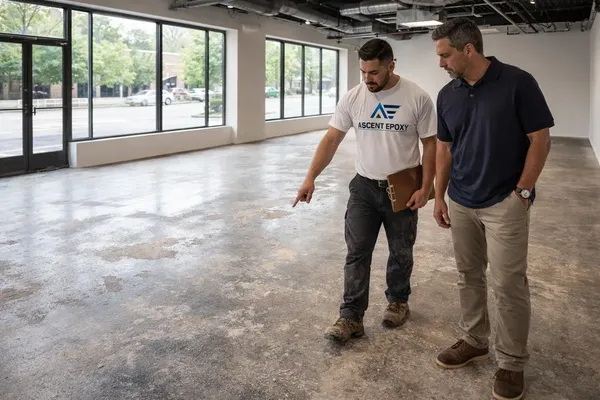
~45 minWe come to your space — boutique, kitchen, clinic, or clubhouse — to read the existing slab, measure square footage, map your traffic and wet zones, and learn when you actually trade. For coastal sites we note proximity to the water, because that shapes the system we'll spec. Schedule yours free.
Custom System Design
1–2 daysWe match the system to your space and your address — a metallic or flake finish for a showroom, a urethane-cement kitchen build, a sanitary clinic floor — and pair it with the right primer, color, anti-slip level, and salt-rated topcoat. Larger or occupied spaces get a zone-by-zone schedule so you never go dark.
Surface Preparation
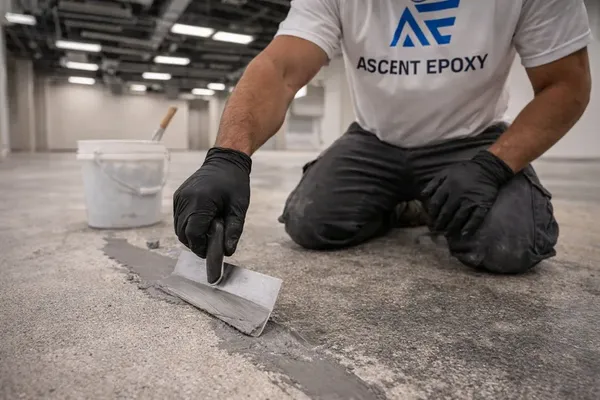
2–4 hrsWe diamond-grind and profile the concrete to create the mechanical bond commercial epoxy demands, then moisture-test the slab — non-negotiable on coastal-ridge ground where a high water table pushes vapor up through the floor. High readings get a vapor-mitigation primer before anything else goes down.
Multi-Layer Application
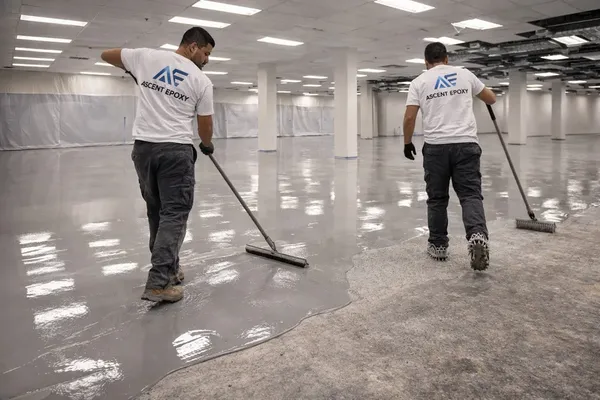
3–5 hrsBlake's crew lays down primer, body coat, broadcast media (flake, quartz, or a poured metallic for showrooms), and a UV-stable, salt-resistant topcoat that holds its gloss in coastal sun. On phased jobs we coat one zone at a time so your team keeps working — and trading — in the rest.
Final Walkthrough & Handoff
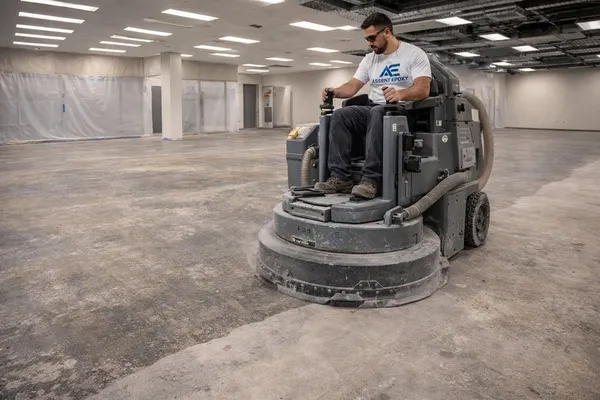
~1 hrWe walk the finished floor with you, verify adhesion, gloss, and slip rating, and hand over a care guide written for how your space actually gets used — front-of-house versus kitchen, sales floor versus service bay. It is all backed by our written warranty, in plain language.
Ready to Start? Step 1 Is Free.
Schedule your no-obligation consultation and see finish samples in your space.
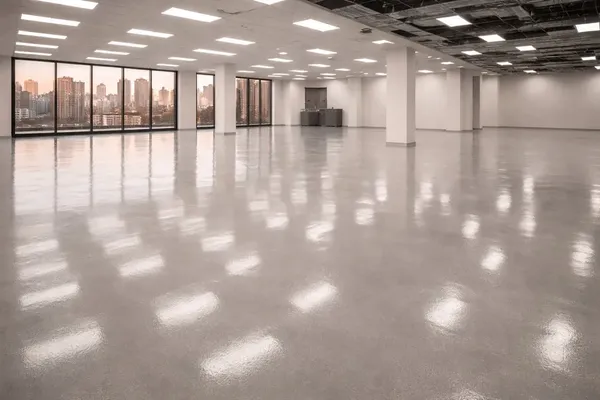
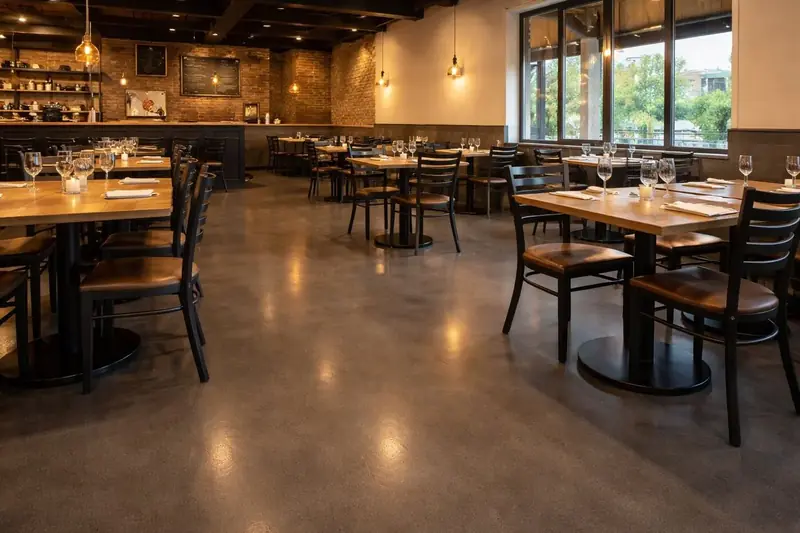
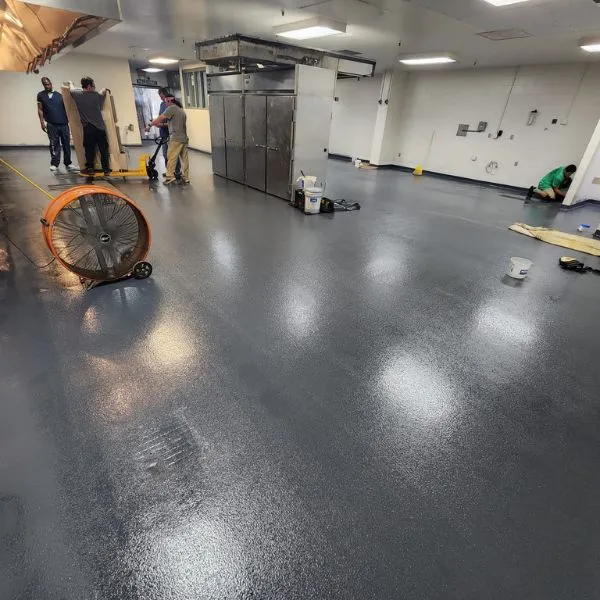
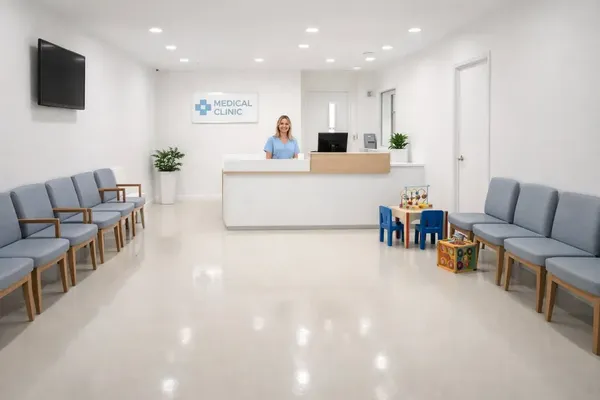
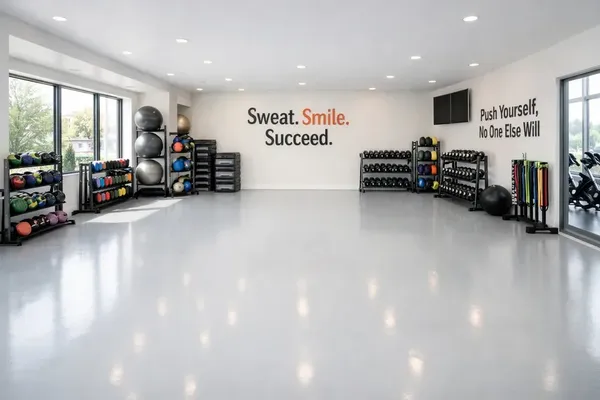
Commercial Floors We've Poured Across the County
Restaurants, retail floors, offices, and service bays from the coast to the western communities — finished to the standard Palm Beach County expects.
The Two Hardest Floors in Hospitality Country
Palm Beach County runs on food. The kitchen behind the dining room and the processing floor behind the commissary are the two most demanding — and most heavily regulated — surfaces we install. Here is how we build each one to last.
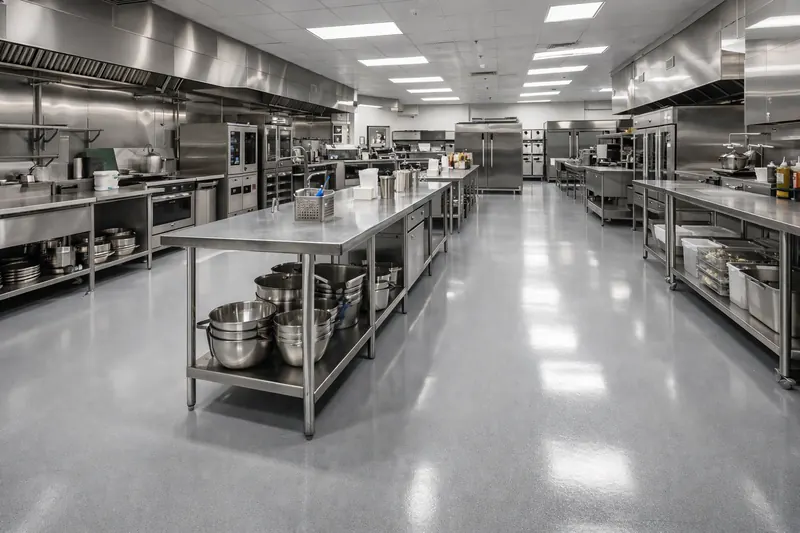
Commercial Kitchen Flooring
A working kitchen on Atlantic Avenue or Clematis Street punishes a floor in ways a standard coating never survives: thermal shock from boiling water and fryer spillover, a constantly wet line, caustic nightly cleaning, and a health inspector who expects a seamless, non-porous surface with nowhere for bacteria to take hold. Rolled-on paint or tile grout fails the test on all counts.
For Palm Beach County restaurants, hotel kitchens, club commissaries, and catering operations we install urethane-cement and high-build epoxy systems engineered for exactly that abuse. They come with integrated anti-slip texture on the line, an integral cove base that closes the wall-to-floor seam, and drainage slope worked into the pour — the details that clear a Florida Department of Health inspection and keep your line cooks on their feet through a full Saturday service.
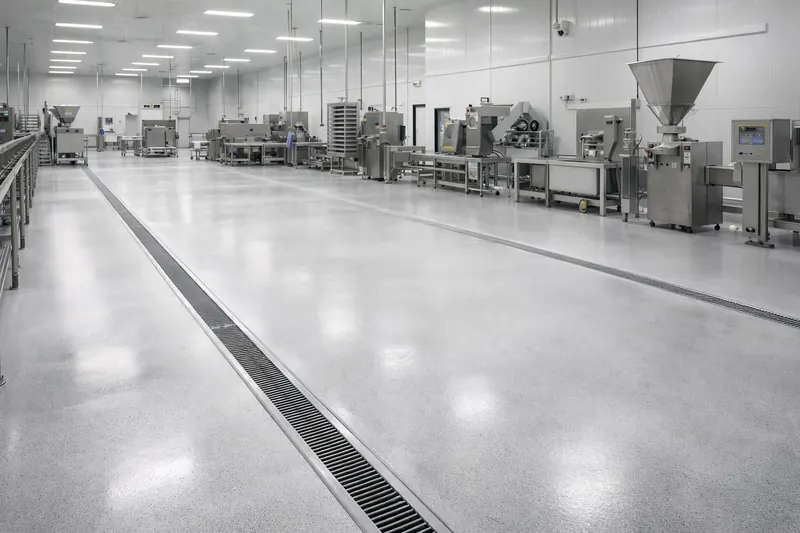
Commissary, Beverage & Food-Processing Floors
Behind the county's restaurants and resorts sits a layer most diners never see: central commissaries, bakeries, seafood and produce packing houses, and the craft-beverage producers feeding the local scene. These run under strict USDA and FDA sanitation rules that spec the floor down to porosity, chemical resistance, and cleanability — and the floor is a control point in your HACCP plan, so a compromised surface can fail an audit and stop production cold.
We install USDA-accepted systems for that work across Palm Beach County, with antimicrobial additives, seamless zero-joint coverage, resistance to clean-in-place (CIP) chemistry, and integrated trench and drain detail. And because every one of these slabs sits on the same high-water-table coastal ground, under-slab moisture is the failure point we never skip — we test each pour and install a vapor barrier when transmission runs high, so the coating doesn't delaminate a year in.
Rated 4.9★ — Ascent Epoxy Network
Real reviews from customers across the Ascent Epoxy network.
"Had my garage done by Ascent Epoxy this spring. The crew showed up on time, explained everything clearly, and finished in two days. The floor looks incredible—smooth, glossy, and easy to clean. You can tell they take pride in their work. Definitely recommend if you're in Palm Beach."
"We had them do epoxy in our shop in Boynton Beach. Super happy with the result and how quickly they finished. Looks way more professional now."
"Friendly guys, fast service, and the floor turned out perfect. Would hire again."
Commercial Epoxy Flooring FAQ — Palm Beach County
Common questions from Palm Beach County business owners about commercial epoxy floor installation.
Commercial epoxy flooring in Palm Beach County typically costs $7 to $15 per square foot installed. The final price depends on the size of your space, the condition of the existing concrete, the type of epoxy system required, and any specialized features like anti-slip aggregate or chemical-resistant topcoats. Larger commercial spaces often benefit from lower per-square-foot pricing due to economies of scale.
For a detailed breakdown by project type, see our Palm Beach County epoxy pricing guide.
Yes, we specialize in phased installation schedules that keep your Palm Beach County business operational during the coating process. For restaurants, retail stores, and offices, we can work in sections — completing one area while you continue using the rest. We also offer weekend and after-hours installation to minimize impact on your daily operations.
Most commercial projects are completed within 3 to 5 days depending on square footage and system complexity.
Yes. Our commercial epoxy systems meet FDA and USDA guidelines for food-contact surfaces when properly installed and sealed. The seamless, non-porous finish prevents bacteria buildup and makes daily cleaning fast and effective — a major advantage for Palm Beach County restaurants navigating health code inspections.
We also offer antimicrobial additive options for commercial kitchens and food preparation areas that need an additional layer of protection.
Properly installed commercial epoxy flooring lasts 10 to 20 years in high-traffic Palm Beach County businesses. The lifespan depends on the type of traffic your space receives, the epoxy system thickness, and how well the floor is maintained.
Our commercial-grade systems use multi-layer applications with industrial topcoats designed to withstand heavy daily use without yellowing, peeling, or wearing through — even in South Florida's humid conditions.
Yes. We serve the entire I-95, Florida's Turnpike, and US-441 corridor including warehouse districts, distribution centers, and commercial facilities across Palm Beach County. Our Palm Beach County team regularly installs commercial and industrial epoxy floors in businesses throughout the Greater West Palm Beach metro area.
We also serve West Palm Beach, Palm Beach Gardens, Wellington, Boynton Beach, Jupiter, Delray Beach, Royal Palm Beach, Lake Worth, and Boca Raton across Palm Beach County. Visit our service areas page for the full list.