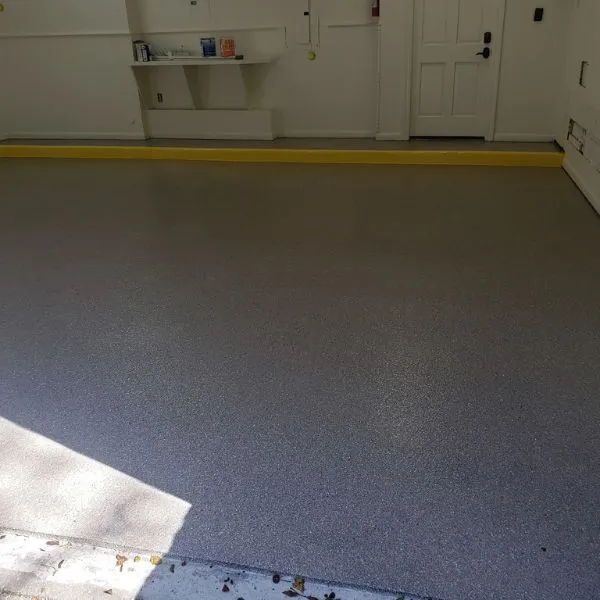
On a barrier island where the Atlantic is one block away and the Intracoastal is the other, the thing that wears an epoxy floor is not the car — it is the salt and the sand that ride in on every shoe and tire. Sweep the grit, damp-mop with a pH-neutral cleaner, rinse with clean water, and rinse salt off any floor the sea air can reach. Stay away from vinegar, citrus degreasers, and abrasive pads, which slowly etch the gloss.
Palm Beach County homeowners pay a premium for a finish that looks the part — a glassy metallic in a Wellington garage runs $9 to $14 a square foot, and even a clean flake system on a two-car bay starts around $2,000 to $4,500, or $4,000 to $5,500 with a polyaspartic topcoat over it. The good news is that protecting that investment costs almost nothing in effort. Epoxy is seamless and non-porous, so there are no grout lines to scrub and nothing for spills to soak into. The only real job here is keeping the abrasive coastal grit moving off the surface before it can dull the shine.
This guide lays out the everyday routine, the products to keep off your floor, and the specific care that an Atlantic-coast slab needs — salt, beach sand, the county's relentless humidity, and the grit that hurricane season drives indoors. It covers the four stains you will actually run into, and the few warning signs that mean it is time to stop scrubbing and bring in a pro. Whether yours is a flake floor in a Jupiter waterfront garage or a metallic finish in a Boca Raton showroom, the playbook is the same. To have Blake's crew look at a worn or failing floor, call (561) 264-5939 for a free assessment.
The Simple Weekly Routine
Care on the Palm Beach coast comes down to three habits, and the first one carries more weight here than almost anywhere inland: get the grit off, mop now and then, and wipe spills as they land. Do those, and a quality floor holds its shine for years.
- Sweep the grit — and do it often. Beach sand and the salt crystals it dries with are the most abrasive thing your floor will ever meet, sharper underfoot than any amount of foot traffic. Tracked in from the dunes and parking lots of Singer Island, Lake Worth Beach, and Delray, those particles act like sandpaper the moment a tire rolls over them. A soft-bristle broom or microfiber dust-mop once a week is the inland minimum; a beachside garage with the door open most days deserves a pass every two or three days so nothing sits long enough to scour the gloss.
- Damp-mop with a pH-neutral cleaner. Roughly monthly — or any time the surface starts to look hazy — cut a pH-neutral floor cleaner into warm water and work a microfiber pad across the floor in sections. Follow with a clean-water pass to rinse. Skipping the rinse is the most common mistake on the coast: leftover cleaner dries into a film, and out here that film traps fine salt and turns cloudy fast.
- Wipe spills before they set. Epoxy's non-porous surface means almost nothing penetrates if you reach it early. Blot oil, brake fluid, paint, or a dropped drink with a paper towel, clean the spot with your pH-neutral cleaner, and rinse. The window is wide because the coating does not absorb — but the sooner the better.
A working two-car garage in Boynton Beach or Royal Palm Beach does fine on a weekly sweep and a monthly mop; a low-traffic interior floor stretches further between mops. Note what is not on the list: no waxing, no sealing, no polishing. Those steps belong to tile and natural stone, not a properly built epoxy system — adding them only creates a film for salt to cling to.
What NOT to Use on an Epoxy Floor
When a Palm Beach County floor looks tired before its time, traffic is rarely the cause — the wrong cleaning product usually is. The topcoat shrugs off impact and chemicals, but a short list of everyday household items will etch or scratch it, and a couple of them are exactly what people reach for to fight salt residue. Keep all of these off the floor.
| Product / Method | Why to Avoid | Use Instead |
|---|---|---|
| Vinegar & acidic cleaners | The acid eats into the clear coat and leaves a permanent hazy bloom | A pH-neutral floor cleaner |
| Citrus & "salt-cutting" cleaners | Marketed for coastal grime, but the acids and solvents degrade the topcoat | Soft microfiber pad with mild soap |
| Steel wool & abrasive pads | Leave scuffs and scratches that no cleaning can buff out | A soft deck brush or microfiber |
| Harsh solvent degreasers | Strong solvents can soften, cloud, or lift the coating | A diluted pH-neutral degreaser |
| Pressure washers up close | Tempting for a salty open garage, but high PSI at the edges can drive water under the coating | A garden hose and clean-water rinse |
The rule of thumb is short: nothing acidic, nothing abrasive, nothing that leaves a residue. A pH-neutral cleaner and a soft pad cover nearly every situation, and a clean-water rinse closes it out. Be especially wary of products sold around here as coastal or salt-fighting formulas — if the label boasts about being a heavy-duty stripper or a "deep-etch" cleaner, it has no business near your epoxy.
South Florida-Specific Care
The fundamentals travel anywhere, but living between the Atlantic and the Intracoastal puts a floor through stresses a dry inland slab never sees. Salt, beach sand, near-constant humidity, intense sun, and the debris of storm season each work on the finish in their own way. None of it is hard to manage — it just means a few coast-specific habits on top of the basic routine.
Beach Sand and Dried Sea Salt
On a county where the barrier islands are minutes from every neighborhood, fine quartz sand and crystallized sea salt ride indoors year-round — on sandals, bike tires, dog paws, and the soles of anyone back from the beach. Of everything a Palm Beach County floor faces, this grit does the most damage, and it does it silently: a single grain caught under a tire is a tiny grinding wheel. The fix is simply to sweep more often than the manuals assume. Treat a weekly pass as your floor, and a quick sweep every couple of days as your beachfront or open-garage rate.
Year-Round Humidity and a Sweating Slab
Palm Beach County sits in heavy humidity nearly every month, and on a warm, muggy morning a cool concrete slab can sweat — a fine film of condensation beading on the surface. The epoxy itself is waterproof, so the moisture does no harm to the coating, but that film picks up tracked-in salt and dries into a cloudy haze if it is left to sit, and it makes the floor slick. Wipe down any standing water, keep air moving with a fan, and crack the bay door on the muggiest days so the surface dries clear instead of hazing.
Storm Season — June Through November
Hurricane season drives more outside in than any other stretch of the year. Wind pushes sand and salt spray under garage doors, rain tracks landscape grit across the slab, and a garage doubles as staging for shutters, generators, and patio furniture being hauled in and out. After a blow, give the floor a thorough sweep and a clean-water rinse before the salt and debris get ground in, and slide a mat under anything heavy you stage on the coating. A few minutes of cleanup after each system keeps storm grit from quietly sanding down the gloss.
Lanais, Pool Decks, and Open Garages
Coated surfaces exposed to the outdoors — a screened lanai, a pool deck, or a garage left open to the trade winds — carry two loads an interior floor does not: chlorine and salt, plus relentless sun. Hose pool-deck and open-garage floors with clean water now and again to clear chlorine splash and salt mist before either can build up. The sun is the second factor, which is why a quality coastal floor here is built with a UV-stable polyaspartic topcoat; even so, rinsing the salt and chlorine away is what keeps the color and clarity from fading on the Atlantic side.
Floor Looking Dull or Worn?
If routine cleaning is no longer bringing back the shine, the coastal sun and salt may have spent the topcoat. Blake's crew will take a look and give you a real Palm Beach County number, free.
Removing Common Stains
Because the coating is non-porous, the great majority of stains park on the surface instead of soaking in, so patience and the right product beat harsh chemicals every time. Here are the four a Palm Beach County floor actually sees — and not one of them needs an acid.
Hot-Tire Marks
A tire that has been baking on West Palm asphalt in July comes home hot enough to leave a dark rubber smear right in the parking spot. Wet it with a pH-neutral degreaser or a citrus-free epoxy-safe cleaner, give it a few minutes to soften the residue, then work it with a soft deck brush or microfiber pad and rinse clean. Repeat the cycle rather than reaching for anything abrasive. A properly built flake floor under a polyaspartic topcoat shrugs off tire transfer to begin with, so if the marks come up easily but keep returning, the topcoat is likely too thin — a recoat solves it for good.
Oil and Grease
Engine oil, transmission fluid, and the odd kitchen-grill spill lift off easily when you catch them early, because none of it can get past the coating. Blot the bulk with a paper towel, lay down a diluted pH-neutral degreaser, let it dwell a moment, then wipe and rinse. A set-in spot usually surrenders on the second pass. Steer clear of the strong solvent degreasers — the kind sold for concrete — which can soften an epoxy finish.
Rust
Rust is a common one on the coast, where salt air corrodes anything metal in a hurry — a jack stand, a tool left out, a planter base. On a sealed floor the stain sits on top: wet it, work it with a soft nylon brush and a pH-neutral cleaner, and rinse. Do not grab a rust remover; almost all of them are acidic and will etch the topcoat. Better still, keep bare metal off the floor entirely with a mat or pad, and the salt-driven rust marks never form.
Paint and Chemical Spills
Latex paint and most household chemicals wipe straight off epoxy while still wet. If paint has dried, soften it with warm soapy water and lift it with a plastic scraper held flat — never a metal blade or razor, which can gouge the coating. Rinse afterward. The seamless surface is forgiving; the whole trick is acting before a spill cures and keeping your tools soft.
Protecting the Finish (and When to Recoat)
Cleaning keeps a floor looking sharp; a handful of protective habits keep it that way for the long haul. The clear topcoat is a sacrificial wear layer — the gentler you are with it, the more years it gives you before it asks for attention, and on the coast that buys real value on a finish you paid a premium for.
- Put a mat where the car parks. A simple parking mat under the tires catches both the hot-tire transfer and the worst of the tracked-in beach grit before it spreads, and a pad under a jack stand keeps point loads and bare metal off the coating.
- Felt-pad anything heavy. A workbench, a rolling tool chest, a storage rack, the second fridge — whatever sits or slides should ride on felt pads or casters so it cannot grind a scratch into the gloss.
- Lift metal, never drag it. Ramps, ladders, hurricane shutters, and tool cabinets get carried, not slid. Dragging metal is the single fastest way to leave a gouge no amount of mopping will fix — and storm-prep season is when most of that hauling happens.
- Lay a drip mat for projects. Wrenching on a boat trailer or running a paint job in the garage? A cheap mat under the work zone spares the floor from concentrated chemical contact.
Even with careful habits, the clear wear coat thins over years of use — and the coastal sun and salt push that along a little faster here than inland. When the floor reads permanently dull despite proper cleaning, that is the topcoat telling you it is due for a refresh, not a sign the floor has failed. A pro scuffs and lays a fresh wear coat over the sound floor underneath, restoring the original gloss for a fraction of a full rebuild. How soon you reach that point depends on traffic and exposure — our guide on how long epoxy floors last in Palm Beach County walks through the timelines.
When to Call a Pro
Routine care is squarely a homeowner job, but a few things are the floor's way of asking for a professional rather than more scrubbing. Reading the difference keeps you from either wearing yourself out on a stain that will never budge or letting a real problem spread.
- Deep or set-in stains that will not lift. If a stain shrugs off two proper cleaning passes, a pro has the epoxy-safe products and methods to clear it without harming the finish — and can tell you straight whether a recoat is the smarter fix.
- A dull, worn topcoat cleaning will not revive. When the gloss is gone for good across the parking zone or main walking lanes, the sacrificial layer is spent. That is a recoat, not more elbow grease.
- Any peeling, bubbling, or blistering — this is the one that matters. Coating that lifts, bubbles, or flakes is almost never a cleaning problem. On a barrier island with a water table this close to the surface, it usually means moisture is pushing up through the slab, and it will only get worse on its own. Our guide on why epoxy floors fail in Palm Beach County explains the slab-moisture test that catches it before it ever happens.
For any of these, an in-person look beats guesswork — and a coastal slab has enough moisture variables that a real inspection is worth it. While you are weighing the options, our breakdown of epoxy flooring cost in Palm Beach County lays out what a recoat or a fresh system runs here, so you walk into the call already knowing the numbers.
Frequently Asked Questions
How do I clean an epoxy floor in a coastal Palm Beach County home?
Start by sweeping the beach sand and salt grit, which is the most abrasive thing the floor faces here, then damp-mop with a pH-neutral cleaner cut into warm water and follow with a clean-water rinse so no film hazes the gloss. Wipe spills as they land. Never use acids, vinegar, citrus degreasers, or abrasive pads. On the coast the only real difference is sweeping more often than the manuals assume.
Can I use vinegar to clean salt residue off my epoxy floor?
No. It is tempting because vinegar cuts mineral deposits, but the acid slowly etches the clear coat and leaves a permanent hazy bloom, and the same goes for citrus and "salt-cutting" cleaners sold around here. To clear salt, use a pH-neutral floor cleaner and a clean-water rinse instead, which lifts the residue without harming the finish.
How do I remove hot-tire marks from epoxy?
Wet the marks with a pH-neutral degreaser or a citrus-free epoxy-safe cleaner, give it a few minutes to soften the rubber, then work it with a soft deck brush or microfiber pad and rinse clean. Never reach for steel wool or an acidic stripper. A properly built flake floor under a polyaspartic topcoat resists tire pickup in the first place, so marks that keep coming back usually mean the topcoat is too thin and is due for a recoat.
What is the best cleaner for an epoxy garage floor in South Florida?
A pH-neutral floor cleaner diluted in warm water is the best everyday choice, lifting beach grit and light grease without etching the finish. For stubborn grease use a diluted pH-neutral degreaser. Avoid vinegar, citrus cleaners, comet-style powders, and any salt-fighting formula that leaves a film, and always finish with a clean-water rinse so salt has nothing to cling to.
How often should I clean an epoxy floor near the beach?
Closer to the Atlantic and the Intracoastal, sweep two or three times a week, because tracked-in sand and dried sea salt are abrasive underfoot and a beachside open garage collects far more of it than an inland one. Damp-mop with a pH-neutral cleaner about monthly, or whenever the floor looks hazy, and after a storm give the floor a thorough sweep and a clean-water rinse to clear the salt and debris the wind drove in.
How do I keep my epoxy floor from getting dull in the coastal sun?
Keep the abrasive beach grit swept up so it cannot scratch the gloss, use only pH-neutral cleaners, rinse off any film, and never drag metal tools or jack stands across the surface. Put a mat where the car parks and felt pads under heavy items. A quality coastal floor carries a UV-stable polyaspartic topcoat, and when that wear layer finally thins after years of sun and salt, a fresh recoat brings back the original shine.
Get Your Free Palm Beach County Epoxy Quote
A few minutes of coastal-smart care keeps an epoxy floor looking new for years. But if yours is already past what cleaning can fix — dull beyond reviving, stained deep, or peeling at the edges where slab moisture has gotten under it — the smart move is a professional look. At Ascent Epoxy Palm Beach, Blake's crew will tell you honestly whether you need a simple recoat or a full system built for the salt, sun, and high water table here, and give you a clear number either way.
Ready to refresh or rebuild your floor? Call (561) 264-5939 or request a free quote online. We serve West Palm Beach, Jupiter, Riviera Beach, Palm Beach Gardens, Boynton Beach, Delray Beach, Lake Worth Beach, Royal Palm Beach, Wellington, Boca Raton, and the surrounding communities up and down the Palm Beach County coast.
Related Articles
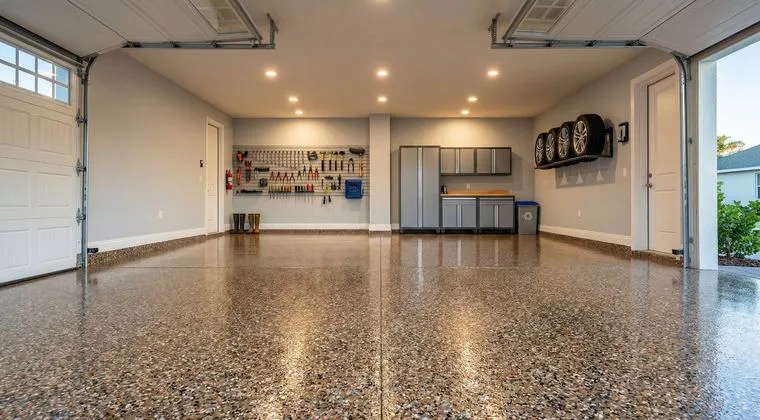
How Long Does an Epoxy Floor Last in Palm Beach County?
Realistic lifespans and what shortens them in South Florida.
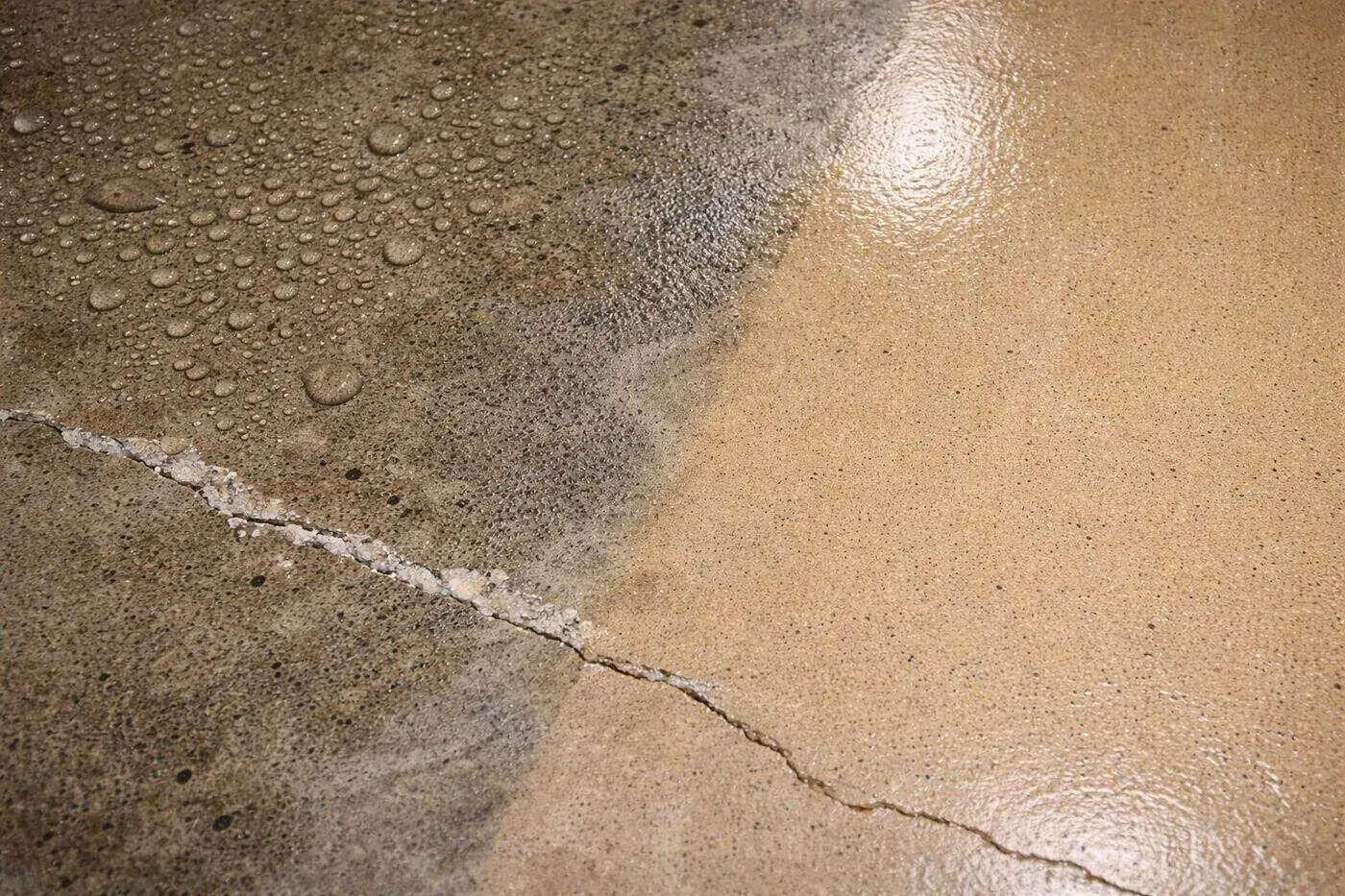
Why Epoxy Floors Fail in Palm Beach County — and the Moisture Test That Prevents It
The high water table, MVT testing, and what to ask before you sign.

How Much Does Epoxy Flooring Cost in Palm Beach County? (2026 Guide)
Real prices by finish and a typical 2-car garage total.