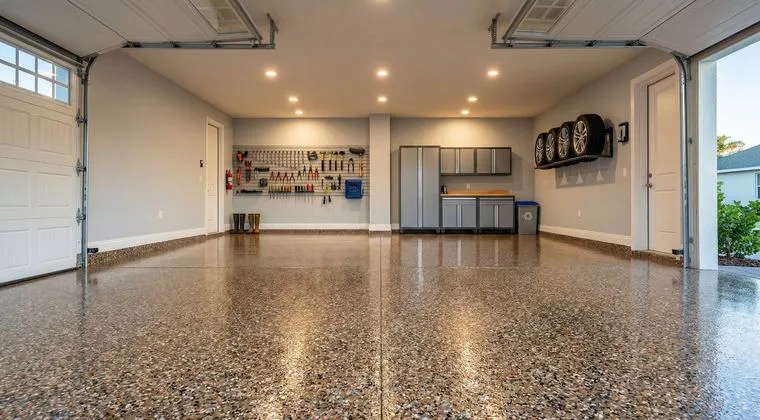
On a Palm Beach County slab, a professionally installed residential epoxy floor lasts about 10 to 20 years, a commercial floor 5 to 10 under heavy traffic, and a bargain roll-on with no grind and no moisture test sometimes fails inside a single season. Here the deciding factor is not the resin you can see — it is whether the installer respected three things the coast throws at every floor: a high water table beneath the slab, Atlantic salt air across it, and sub-tropical sun on top of it.
Palm Beach County is a place where the floor is expected to look as finished as the rest of the home. From the barrier-island estates of Palm Beach and Manalapan to the newer builds in Wellington and Palm Beach Gardens, owners here are not buying a utility coating — they are buying a surface that has to stay showroom-clean for a decade on a coastline that is brutal on cheap work. That raises the stakes on the one number nobody advertises: how long the floor actually lasts. Two garages finished with the identical resin can end up fifteen years apart, and on the Intracoastal that gap usually comes down to how the slab was treated before the first coat ever went down.
This guide gives you the honest lifespan of each system on a coastal slab, the three local forces that quietly age a floor here, and the prep that buys back the years — plus where a finish-grade floor sits on price. For the dollar figures, our Palm Beach County cost guide breaks down what each system runs to install.
Epoxy Floor Lifespan by System
The word "epoxy" gets stretched across products that have almost nothing in common past the resin. A big-box weekend kit and a diamond-ground, polyaspartic-topped flake system are not two grades of the same floor — they are two different things separated by ten-plus years of service. Because Palm Beach County buyers tend to spec the higher tiers, it helps to see lifespan and price together. The numbers below assume the floor is installed correctly on a properly prepared coastal slab; a typical finished two-car garage here lands around $2,000 to $4,500 in a flake system and nearer $4,000 to $5,500 with a polyaspartic topcoat over that flake, with most systems pricing out at roughly $5 to $12 per square foot.
| System | Typical Lifespan | Installed Price | Where It Fits in Palm Beach County |
|---|---|---|---|
| DIY paint / roll-on kit | 1–3 years | Kit cost only | A cosmetic stopgap; the first thing the coast peels back up |
| Solid-color professional | 10–15 years | ~$5–7/sq ft | Workshop bays, storage rooms, rental-property garages |
| Flake + polyaspartic topcoat | 15–20 years | ~$7–12/sq ft | The default coastal garage — the best value for the climate |
| Quartz / industrial | 15–20+ years (commercial) | ~$3–8/sq ft (commercial) | Marina shops, clubhouse kitchens, clinics, warehouse bays |
| Metallic with UV-stable topcoat | 10–20 years | ~$9–14/sq ft | Estate garages, car collections, showroom-grade interiors |
The pattern is hard to miss. The cheapest option has the shortest life by a wide margin, and the difference is not the color or the gloss, it is the bond and the topcoat. A DIY kit skips the diamond grind, skips the moisture test, and tops out with a thin consumer-grade sealer, which is why it peels in a year or two. A professional flake-and-polyaspartic system is engineered for the abuse and the climate, which is why it routinely doubles or triples the lifespan of anything you can roll on yourself.
What Shortens an Epoxy Floor's Life in Palm Beach County
Early failures are rarely bad luck. They come from a short list of conditions — and on a barrier-island county wedged between the Atlantic and the Everglades, three of them hit harder than they do almost anywhere else in the country. Get to know these and you can tell, on day one, whether a floor was built for the coast or quietly set up to peel.
Salt Air — the Coastal Tax on Every Open Bay
Start with the one most installers from inland markets underestimate. Palm Beach County is a thin strip of coast, and from the Palm Beach barrier island west to Wellington the air carries Atlantic salt that settles on and works into any exposed coating. On a sealed interior garage it is a slow background factor; on an open-bay garage, a waterfront patio, a pool deck, or a marina shop near the Intracoastal it becomes a real one, attacking edges and seams where the film is thinnest. Salt creeps into any weak joint and accelerates surface wear, which is why coastal projects here are specified with thicker, more chemically resistant builds and a UV-stable topcoat — the difference between a finish that reaches its full life and one that frays at the perimeter in a few seasons.
A High Water Table Pushing Up From Below
The most common killer of all here works from underneath. Sitting on porous limestone at near sea level, much of Palm Beach County has a water table only a few feet down, and that groundwater drives moisture vapor steadily up through the slab. When the vapor reaches the back of a coating it builds pressure and lifts the floor off the concrete — bubbling, then delamination that no resin on the surface can hold against. A floor can stay flawless through its first dry season and then blister through the first heavy summer rains. The cure is never a fancier topcoat; it is an ASTM slab-moisture test before the job (a $200–400 value that comes free with our estimates) and a mitigation primer wherever the reading calls for one.
Sub-Tropical Sun That Never Lets Up
The third coastal force comes from above. Palm Beach County runs on sun nearly year-round, and that light is merciless on any coating that is not UV-stable. A standard epoxy topcoat ambers, yellows, and chalks under direct exposure — the afternoon glare through an open garage bay in Jupiter, the unshaded glass of a Boca Raton interior. That color shift is not just cosmetic; it is the topcoat breaking down and shedding its protective value. A UV-stable polyaspartic or polyurea topcoat is what holds the color and the protection through the full lifespan instead of letting the floor go patchy and dull within a couple of bright seasons.
Year-Round Heat and Hot-Tire Pickup
The same sun that fades the surface keeps slab and tire temperatures high all twelve months, and hot tires are harder on a garage floor than owners expect. Park a vehicle after a drive on a 90-degree day and the hot rubber can grip a thin, undercured, or weakly bonded surface, then tear it loose when the car rolls out the next morning. That is hot-tire pickup, and it is a tell-tale sign of a floor that was never bonded properly to begin with. A diamond-ground, fully cured system under a polyaspartic topcoat shrugs it off; a roll-on kit in this heat usually does not.
The Shortcut That Undoes the Rest: Acid Wash Instead of a Grind
Every coastal force above is survivable — if the coating is actually bonded to the slab. That is where the cheapest jobs cut the corner that matters most. A real install opens the concrete with a diamond grinder so the resin can mechanically lock into it. The shortcut is an acid wash, which lightly etches the surface but never builds a true mechanical key. An acid-washed floor looks identical on day one and starts lifting at the edges within months. On a Palm Beach County slab — already loaded with vapor pressure from below and salt at the seams — skipping the grind all but guarantees early failure, no matter how good the resin poured on top.
Want a Floor Built to Last in South Florida?
Tell us about your slab. We test for moisture, prep with a diamond grind, and finish with a UV-stable topcoat made for this climate, free estimate first.
What Extends an Epoxy Floor's Life
Every one of those coastal forces has a counter-move, and used together they are what carry a residential floor to the high end of the 10-to-20-year range while keeping it looking new the whole way. Two of them — the moisture test and the UV-stable topcoat — are non-negotiable on a Palm Beach County slab specifically. The rest is upkeep almost anyone can manage.
- An ASTM moisture test before anything else. On a high-water-table slab this is the step that decides whether the floor survives the rainy season. Test first, then prime for mitigation wherever the reading demands it — this is the single most important thing the coast forces you to get right.
- A full diamond grind. A mechanically ground slab gives the resin a true bond, the foundation every other year of service is built on. No grind, no longevity — and on a coastal slab, no chance.
- A UV-stable polyaspartic or polyurea topcoat. This is the layer that absorbs the salt, the sun, and the hot tires. It is also the sacrificial wear layer you renew over time instead of replacing the whole floor — the part that makes a coastal floor worth the higher tier.
- Rinsing off salt and grit. Near the water, an occasional rinse of the open bay clears settled salt before it works into the finish; everywhere, regular sweeping and dust-mopping keeps abrasive debris from sanding the topcoat down.
- Recoating on schedule. A fresh topcoat every 5 to 10 years renews the wear layer and the UV protection long before the base coat is ever at risk — the cheapest longevity insurance there is.
- Skipping harsh chemicals. Aggressive acids, solvents, and abrasive pads strip and dull the finish early. Mild cleaners protect it; the rough stuff shortens its life.
None of this is exotic — it is the gap between treating the floor as a finished system that gets a little care and treating it as a one-and-done slab of paint. For the full coastal routine, our guide on how to clean and maintain an epoxy floor in Palm Beach County covers exactly what to do and what to avoid.
Residential vs. Commercial Lifespans
The split between a 10-to-20-year residential floor and a 5-to-10-year commercial floor has nothing to do with build quality — it is workload. An estate garage in Palm Beach Gardens parks a couple of vehicles and sees light foot traffic. A commercial floor lives a far harder life, and the surface absorbs every bit of it.
Picture the same coating in a marina service bay, a clubhouse kitchen, or a light-industrial shop off the corridors west of I-95: forklifts and pallet jacks dragging steel wheels, foot traffic worn into narrow lanes, dropped loads, and harsh cleaners scrubbed in daily. Each of those abrades the topcoat faster than anything a home floor will ever meet, so commercial systems are spec'd thicker and harder and their recoat intervals arrive sooner. A quartz or industrial build carries that load best — the reason kitchens, clinics, and warehouse floors here lean on it — and at roughly $3 to $8 per square foot it is priced for the square footage those spaces cover.
The point is not that commercial floors are weaker; it is that they are scheduled differently. A well-run one reaches the top of its range because the operator builds a recoat into the cycle instead of waiting for the surface to give out. Match the system to the traffic, plan the maintenance around the coast, and the lifespan follows.
Signs of Wear: Recoat or Replace?
When a coastal floor starts to show its age, the costliest assumption is that it has to be torn out. Usually it just wants a fresh topcoat. The whole decision turns on one question: is the coating still bonded to the slab? If it is firmly stuck down, you almost certainly have a recoat. If it has lost its grip — which on a Palm Beach County slab usually means moisture or salt found a way in — you are looking at a full replacement.
When a Recoat Is All You Need
Dull, lightly scratched, scuffed, or sun-faded but still locked tight to the concrete — that is a recoat, not a tear-out. The wear sits in the sacrificial topcoat, which is exactly what that layer exists to take. Clean it, scuff-sand it, lay a fresh UV-stable topcoat, and it comes back looking new for a fraction of replacement cost. Catching it at this stage is the entire reason to recoat on schedule: you renew the surface before the coast's wear ever reaches the base coat.
When Only a Full Replacement Will Do
Peeling, blistering, bubbling, or delamination is a different verdict. Those symptoms mean the bond has failed — here, almost always because vapor pushed up from the high water table or because the original prep skipped the grind and never bonded at all. You cannot recoat a floor that is lifting; a fresh topcoat over a failed bond fails right alongside it. That floor has to be ground off and reinstalled correctly, with a moisture test and a real grind this time. If yours is showing those signs, our guide on why epoxy floors fail in Palm Beach County and the moisture test that prevents it walks through what went wrong and how to keep it from repeating.
Frequently Asked Questions
How long does an epoxy garage floor last in Palm Beach County?
A professionally installed garage floor here typically lasts 10 to 20 years. A solid-color system runs about 10 to 15 years, while a flake floor under a UV-stable polyaspartic topcoat reaches 15 to 20 — the topcoat is what survives the salt air and sub-tropical sun. A bargain roll-on kit, by contrast, often fails within 1 to 3 years on a coastal slab. What decides the lifespan is the prep beneath the floor, not the brand of resin poured on top.
How often should a coastal epoxy floor be recoated?
Plan on a fresh topcoat every 5 to 10 years — sooner on a busy commercial floor or a salt-exposed open bay, later on a lightly used estate garage. Recoating renews the sacrificial wear layer and the UV protection long before the base coat is ever at risk. Catching it at the dull-and-scratched stage costs a fraction of waiting until the floor delaminates and has to be fully replaced.
Does Palm Beach County's water table shorten epoxy floor life?
It can, but only when prep is skipped. The county sits on porous limestone near sea level, so groundwater drives moisture vapor up through the slab; without an ASTM moisture test and a mitigation primer, that vapor lifts the coating from beneath. A properly tested and primed floor handles the high water table for its full expected life. The water table does not shorten a correctly installed floor — skipped moisture mitigation does.
Can you recoat an epoxy floor instead of replacing it?
Yes, as long as the bond to the slab is still sound. A floor that is merely dull, lightly scratched, or sun-faded but firmly adhered can be cleaned, scuff-sanded, and given a fresh topcoat for a fraction of replacement cost. Replacement is only necessary when the coating is peeling, blistering, or delaminating — on this coast usually a sign that moisture or salt found a way in, which a recoat cannot fix.
How long does commercial epoxy last here?
Commercial floors in Palm Beach County generally last 5 to 10 years before a recoat, because they take far more abuse than a home floor. Forklifts, pallet jacks, concentrated foot traffic, dropped loads, and harsh daily cleaners all wear the surface faster. At roughly $3 to $8 per square foot, heavy-duty quartz and industrial systems sit at the top of that range, and a scheduled recoat pushes them well beyond it.
What makes an epoxy floor fail early on the coast?
Almost every premature failure traces back to prep, not the resin. The usual culprits are no diamond grind (an acid wash instead), a skipped moisture test on a high-water-table slab, a non-UV-stable topcoat that ambers and chalks in the sun, and thin consumer-grade roll-on product. Salt air at the seams and hot-tire pickup finish off floors that were poorly bonded to begin with. Done right, the floor lasts for decades.
Get Your Free Palm Beach County Epoxy Quote
So the honest answer is that an epoxy floor lasts exactly as long as the coast lets the installation get away with. A tested slab, a real diamond grind, a UV-stable topcoat built for salt and sun, and a little routine care add up to a floor that holds for 10 to 20 years and still looks the part in a Palm Beach County home. Skip those steps on this coastline and you have bought a floor with an expiration date measured in months. The encouraging part is that all of it is in your control — and it starts with hiring someone who treats the prep, not the pour, as the actual job. For a finished two-car garage here, plan on roughly $2,000 to $4,500 in flake, or $4,000 to $5,500 once a polyaspartic topcoat goes over it, depending on the system and slab.
Ready to talk it through? Call us at (561) 264-5939 or request a free quote online — the ASTM moisture test comes with every estimate. We work across West Palm Beach, Jupiter, Riviera Beach, Palm Beach Gardens, Boynton Beach, Delray Beach, Lake Worth, Royal Palm Beach, Wellington, Boca Raton, and the surrounding communities throughout Palm Beach County.
Related Articles
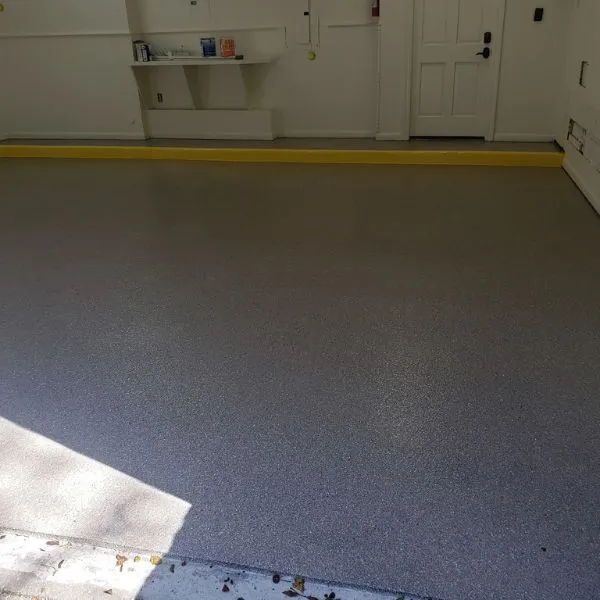
How to Clean and Maintain an Epoxy Floor in Palm Beach County
The simple routine that keeps a floor looking new in South Florida.
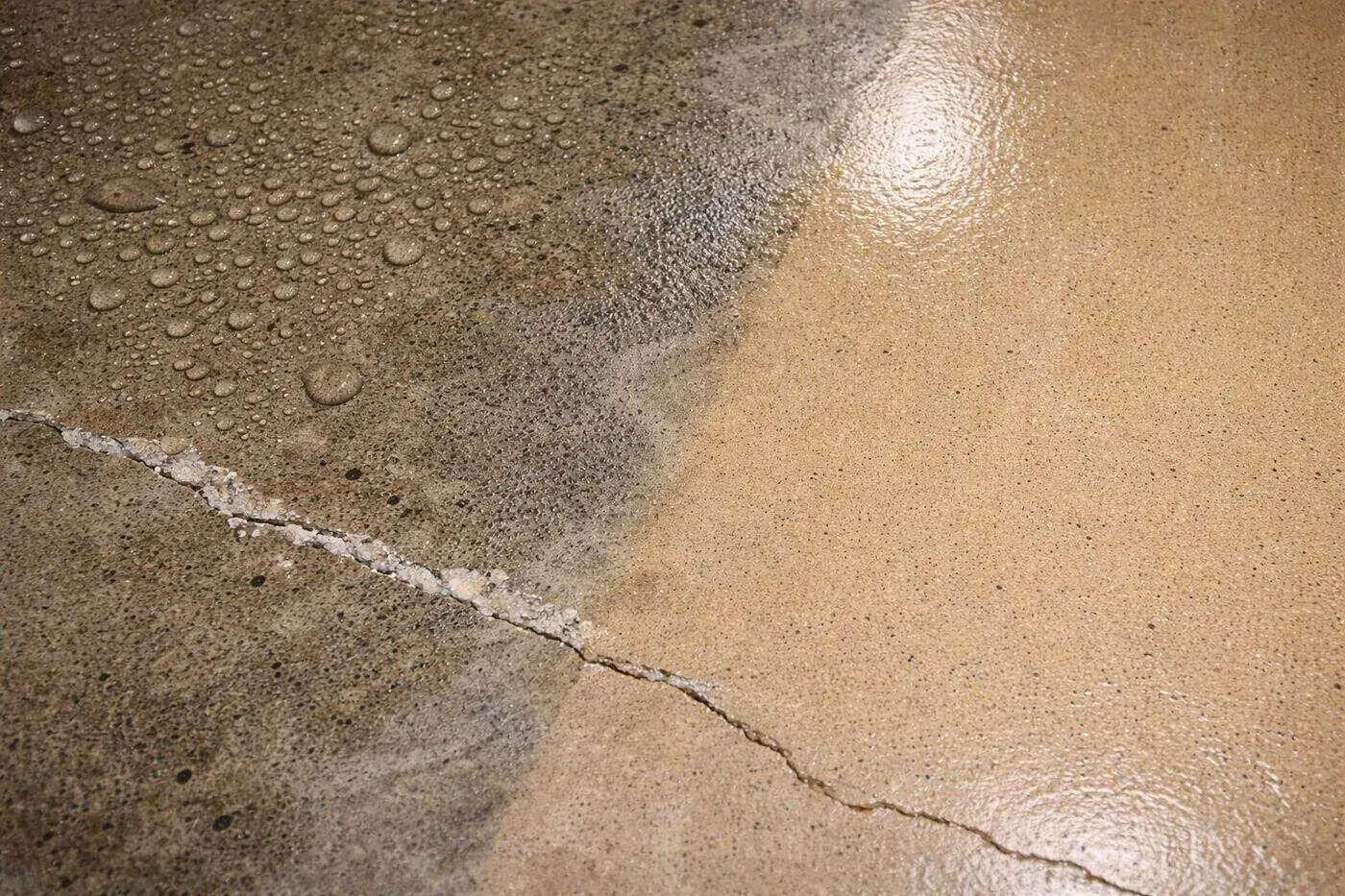
Why Epoxy Floors Fail in Palm Beach County — and the Moisture Test That Prevents It
The high water table, MVT testing, and what to ask before you sign.
How Much Does Epoxy Flooring Cost in Palm Beach County? (2026 Guide)
Real prices by finish and a typical 2-car garage total.