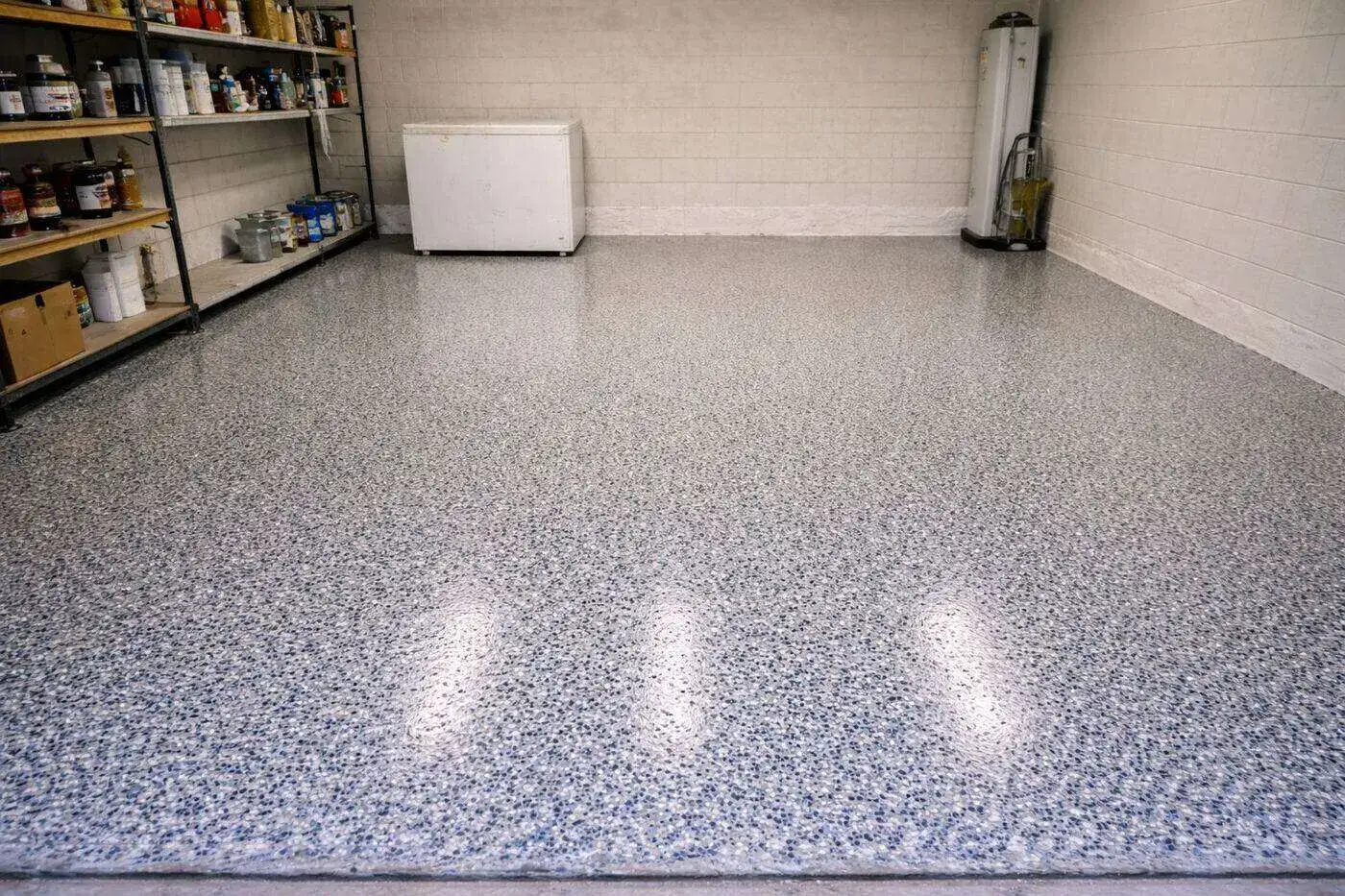
In Palm Beach County the worth-it question really comes down to one word: salt. On a coast where homes from the Intracoastal to the barrier island carry high-end finish expectations, a professionally installed epoxy floor — real diamond-grind prep, slab moisture testing, a UV-stable topcoat — is one of the smartest flooring dollars you can spend, lasting 10 to 20 years against the salt air, humidity, and tropical heat. The version that is not worth it is a big-box kit poured over an untested slab, which tends to peel within a season.
Palm Beach County homeowners ask this question differently than people elsewhere. Here the garage often opens onto a property where the rest of the finish work is impeccable, so a floor either matches that standard or it sticks out. And the environment is unforgiving in a specific way: salt-laden air off the Atlantic, afternoon downpours, a water table that sits close to the surface near the coast. Those conditions reward a floor that is engineered for them and punish one that is not. So "is it worth it?" is really "is it done right for this coast?"
Blake and the Ascent Epoxy Palm Beach crew install floors from West Palm Beach and Lake Worth inland to Wellington and Royal Palm Beach, and out to the coastal communities of Jupiter, Palm Beach Gardens, Boynton Beach, Delray Beach, and Boca Raton — so the framework below is built around what actually holds up in this county, not a generic brochure. We will walk the real pros, the cons most installers skip, how epoxy compares to tile and polished concrete, and exactly when to do it and when to wait. Prefer to talk it through? Call (561) 264-5939 for a free, no-pressure estimate.
The Case For Epoxy: The Real Pros
Strip away the sales language and a handful of benefits are what actually make epoxy pay off in a Palm Beach County garage, workshop, or commercial floor. These are the ones that show up in daily use along this coast.
- It shrugs off the salt-air environment. Pool chemicals, salt tracked in from the beach, boat-trailer brine, fertilizer, and motor oil all bead on a sealed epoxy surface instead of etching and staining the way they do on bare coastal concrete. For a property near the Intracoastal or the barrier island, that resistance is the whole point.
- It finishes the floor to the standard of the home. On affluent Palm Beach County properties the rest of the finish work is dialed in, and a stained gray slab undercuts it. A flake or metallic epoxy system reads as a deliberate, high-end surface that matches the quality of the house around it.
- One seamless surface, almost no upkeep. No grout lines and no pores means salt grit, dust, and spills wipe up with a mop or a quick rinse — a genuine relief in a humid garage that wants to grow mildew in every seam.
- Real durability against the things that wreck a slab. A properly bonded floor takes dropped tools, dragged gear, hot tires, and steady foot traffic and keeps going for 10 to 20 years in a home garage before it needs attention.
- It hides what the slab has been through. A full flake broadcast camouflages minor cracks, patches, and the discoloration South Florida slabs pick up over the years — a finished, uniform look without the cost of replacing concrete.
- Brighter, even on a gray afternoon. A glossy topcoat bounces the light around, so a garage or workshop feels open and well-lit through a summer rainstorm without adding a single fixture.
- It shows beautifully when you sell. In a county where buyers expect polish, a clean professional floor makes a garage or finished space present like a maintained, upgraded room — a low-cost touch that earns an outsized first impression.
The Honest Cons
An honest answer means naming the downsides too, including the ones a contractor in a hurry to close will skip. None of these are dealbreakers when the floor is done right, but you should go in knowing them.
- Coastal moisture is the real risk — and it is invisible until it is too late. Lead with this one, because it is the con that sinks more Palm Beach County floors than anything else. Near the coast the water table sits close to the surface, and an untested slab can push moisture vapor up through the concrete. Coat over that without testing and a mitigation primer and the floor bubbles and delaminates from underneath, no matter how premium the product. The fix is cheap; finding out the hard way is not.
- A real system costs more than a coat of paint. Professional epoxy runs roughly $5 to $12 per square foot installed here, and a quality 2-car garage flake floor typically lands in the $2,000 to $4,500 range, rising to about $4,000 to $5,500 once you add a polyaspartic wear layer over the flake; metallic finishes run higher, around $9 to $14 per square foot. A bucket of garage paint is a fraction of that. You are buying an engineered system built for this climate, not a color — and on a coast with high finish expectations, that distinction matters.
- The whole floor lives or dies on prep. Diamond grind, crack repair, and moisture testing are not optional add-ons; they are the floor. A quick acid wash and a roller is exactly the shortcut that produces the failures you hear about. The trouble is the prep is invisible once the topcoat goes on, so you cannot judge it by looking — only by who did it.
- Smooth gloss is slick when wet. A glassy topcoat can get slippery once water or salt spray gets on it — worth thinking about by a pool deck or an entry that sees rain. An anti-slip additive or a textured flake or quartz finish solves it completely, but it has to be specified up front.
- The space is out of use while it cures. Prep, coat, and cure take time; expect a couple of days before you walk on it and longer before you park. Polyaspartic systems shorten the window, which is why we lean on them in this climate, but it is still a real scheduling consideration.
- DIY usually fails here, and then you pay twice. Big-box kits look easy and skip the two steps that matter most in Palm Beach County — a full grind and moisture testing. An under-prepped coating on a damp coastal slab frequently peels within a year, and then it has to be ground off and redone properly.
- It will not save a failing slab. Epoxy is a coating, not a structural fix. If the concrete is spalling badly, heaving, or breaking apart — common where saltwater intrusion has been at older coastal slabs — a coating fails right along with it. The slab has to be sound first.
Epoxy vs. the Alternatives
Worth-it is a relative question, so the fair test is to set epoxy beside the other ways you could finish the same coastal slab. In Palm Beach County the deciding factors are usually how the surface handles salt, humidity, and pool-area moisture, and whether it looks the part on a property where the rest of the finishes are high-end. Here is how the four common choices stack up.
| Epoxy Coating | Porcelain / Ceramic Tile | Polished Concrete | DIY Paint / Roll-On Kit | |
|---|---|---|---|---|
| Upfront cost | Moderate ($5–$12/sq ft; 2-car flake $2,000–$4,500, or $4,000–$5,500 with a polyaspartic topcoat) | Higher (material + skilled labor) | Moderate | Lowest |
| Lifespan | Long (10–20 yrs, pro install) | Long (decades, if grout maintained) | Long | Short (often under 2 yrs) |
| Durability | High — seamless, impact and abrasion resistant | Hard but can chip and crack on impact | Very high | Low — peels and wears fast |
| Maintenance | Very low — wipe or hose clean | Higher — grout lines stain and need scrubbing | Low — periodic reseal | High — frequent touch-ups |
| Moisture tolerance (coastal PBC) | Excellent with mitigation primer + testing | Good, but grout can trap moisture | Good — it is the slab itself | Poor — lifts on damp coastal slabs |
| Look / customization | Wide — solid, flake, metallic, quartz | Wide tile selection, visible grout | Limited — shows the concrete | Basic — solid color only |
| Best for | Garages and finished spaces wanting durability + looks | Living spaces wanting a specific tile look | Industrial or minimalist modern look | Tight budgets and short-term fixes |
The pattern sorts itself out quickly. Tile belongs inside the house where a specific decorative look drives the decision. Polished concrete suits a hard, low-fuss, minimalist surface for a showroom or modern interior. A DIY kit wins on price alone and only if you accept that it may not survive its first wet season near the coast. For the Palm Beach County garage, lanai-adjacent space, or commercial floor that has to look sharp, resist salt and pool chemicals, and outlast the humidity, a professionally installed epoxy system is the clear best balance of the four.
Not Sure Epoxy Is the Right Call for Your Space?
Tell us about your slab and your goals. We will give you a straight answer on whether epoxy makes sense — and a real number, free.
When Epoxy IS Worth It
For a lot of Palm Beach County homeowners the answer is a confident yes. If one or more of the following fits your situation, the floor will earn its cost back in durability, looks, and the upkeep you never have to do.
- Your slab is sound and you are hiring someone who tests it. Most county garages sit on concrete that is in good enough shape for a coating — the question is the installer. When they moisture test for the coastal water table, diamond grind, repair cracks, and finish with a UV-stable polyaspartic topcoat, you get the long-lived floor epoxy is famous for. That combination is the single biggest predictor of worth-it here.
- You want a garage that matches the rest of the house. On a finished Palm Beach County property a stained, dusty slab is the one surface that lets the side down. A flake epoxy floor closes that gap and keeps looking sharp through years of humidity.
- You are around salt, pool chemicals, or solvents. Coastal garages, home gyms, boat and hobby workshops, and commercial spaces all live with the exact spills epoxy is built to resist. The resistant surface pays off directly every time something gets tracked in or spilled.
- You are staying in the home a while. The longer you own it, the more the cost-per-year math favors one durable floor over a cheap one you keep redoing — especially in a climate that is hard on cheap floors.
- You are getting the property ready to show. In a county where buyers and appraisers expect polish, a clean epoxy floor delivers an outsized visual lift for what it costs, whether you are listing soon or just want the space to feel intentional.
When Epoxy Is NOT Worth It
Knowing when to wait matters just as much. Blake would rather give you a straight no than sell a floor that will not last on your slab. Hold off, at least for now, if any of these describe your situation.
- Testing shows high moisture and there is no budget for mitigation. This is the one to take seriously on the coast. If a moisture test reads high and you cannot fund a mitigation primer, coating the slab anyway is money thrown at a floor that will likely lift from underneath. Fix the moisture path or wait until you can — do not gamble on it in this water table.
- The slab is spalling or failing and needs work first. If the concrete is crumbling, heaving, or breaking apart — which older coastal slabs do where moisture and salt have been at them — a coating cannot save it. Repair or replace the slab before any epoxy goes down.
- Your budget only reaches paint. If a real engineered system is genuinely out of range and the only option is a thin roll-on, be honest that you are buying a short-term cosmetic fix, not a lasting floor. In this climate, saving a little longer for the real thing is often the smarter call.
- You are about to move. If you are selling or relocating in the near term, you may not be in the home long enough to enjoy the floor or recover its cost. A lighter cosmetic refresh may make more sense than a full system.
The Palm Beach County Verdict
Here is where it lands for this coast. For the typical Palm Beach County homeowner with a sound slab who hires a real professional, epoxy is one of the highest-value floors you can put down anywhere in South Florida. Proper diamond-grind prep, moisture testing for the coastal water table, and a UV-stable polyaspartic topcoat buy you a decade or two of a durable, easy-clean, good-looking surface in the $4,000-and-up range for a 2-car garage. Spread that over its life and it is hard to beat — and it earns back even more on a property where the floor is expected to look the part.
The horror stories — the bubbling, the peeling, the floor that failed before its first summer was out — almost never come from the product. They come from skipped steps: no moisture test, no real grind, a consumer kit, no protective topcoat. Salt air, daily humidity, and a coastal water table find those shortcuts fast. Whether a floor is worth every dollar or a waste of money comes down almost entirely to how, and by whom, it was installed.
So if you are weighing it: yes, it is worth it in Palm Beach County — provided you do it right for this environment. For the numbers behind the decision, read the Palm Beach County cost guide, and to understand the one failure mode that sinks coastal floors, read why floors fail in Palm Beach County and the moisture test that prevents it.
Frequently Asked Questions
Is epoxy flooring worth the money in Palm Beach County?
For most homeowners here, yes, as long as it is professionally installed with a real diamond grind, moisture testing for the coastal water table, and a UV-stable topcoat. A 2-car garage flake floor typically runs $2,000 to $4,500, or $4,000 to $5,500 with a polyaspartic topcoat over the flake, and spread over the 10 to 20 years it lasts against salt air and humidity, that is one of the better values in flooring. Where epoxy stops being worth the money is a cheap DIY kit rolled over an untested coastal slab, which often fails within a season and has to be ground off and redone.
Is epoxy better than tile in a Palm Beach County garage?
In a garage, usually yes. Epoxy is a single seamless surface with no grout lines to stain or trap the salt grit and humidity that mildews tile joints here, it resists hot tire pickup, pool chemicals, and spills, and it costs less to install than a comparable tile floor. Tile can chip when you drop a heavy tool. Tile still wins inside the house where you want a specific decorative look, but for a coastal garage a flake epoxy floor is the more practical choice.
Does epoxy add value to a Palm Beach County home?
A clean, professionally finished epoxy floor improves how a garage or finished space shows, which matters in a county where buyers and appraisers expect polish in every room. It reads as a maintained, upgraded surface rather than bare or stained coastal concrete. It is not a guaranteed dollar-for-dollar return like a kitchen remodel, but as a relatively low-cost upgrade that makes a strong first impression on a high-end property, it is a sensible value-add.
Is DIY epoxy worth it on a coastal slab?
Usually not in Palm Beach County. A big-box kit skips the two steps that matter most here, a full diamond grind and slab moisture testing. Near the coast the water table sits close to the surface, and an untested slab can push enough moisture vapor to lift a coating from underneath within months. When a DIY floor fails it has to be ground off and recoated, so you pay twice. DIY can work on a dry, well-prepped interior slab, but on a coastal slab it is a gamble.
How does epoxy compare to polished concrete?
Both turn a bare slab into a finished floor, but they solve different problems. Polished concrete grinds and densifies the existing slab into a hard, low-maintenance surface, so it shows the concrete itself and any cracks or stains in it. Epoxy adds a colored coating on top, giving you far more color and pattern options and hiding slab flaws under a flake or metallic finish. Epoxy also offers better resistance to salt, pool chemicals, and stains, while polished concrete needs periodic resealing. For a coastal garage with marks to hide, epoxy is usually the better fit.
Will an epoxy floor really last in Palm Beach County's salt air and humidity?
Yes, when it is installed for this coast. The failures you hear about almost always trace back to skipped prep, not the product. A floor that is moisture tested, given a mitigation primer where the slab needs it, and finished with a humidity-tolerant, UV-stable polyaspartic topcoat holds up well against Palm Beach County's salt air, heat, and humidity. The same floor installed without testing or proper prep is the one that bubbles and peels.
Get Your Personalized Palm Beach County Epoxy Quote
The only honest way to know whether epoxy is worth it for your floor is to have the slab looked at in person. Every Ascent Epoxy Palm Beach estimate starts that way — a real read on your concrete, moisture testing for the coastal water table, and a straight conversation with Blake's crew about whether epoxy is the right move for your space and budget. If it is not the best fit, we will say so. If it is, you walk away with a clear number and a system engineered for salt air and South Florida humidity.
Ready to find out? Call (561) 264-5939 or request a free quote online. We serve West Palm Beach, Jupiter, Palm Beach Gardens, Boynton Beach, Delray Beach, Lake Worth, Royal Palm Beach, Wellington, Boca Raton, and the surrounding communities across Palm Beach County.
Related Articles
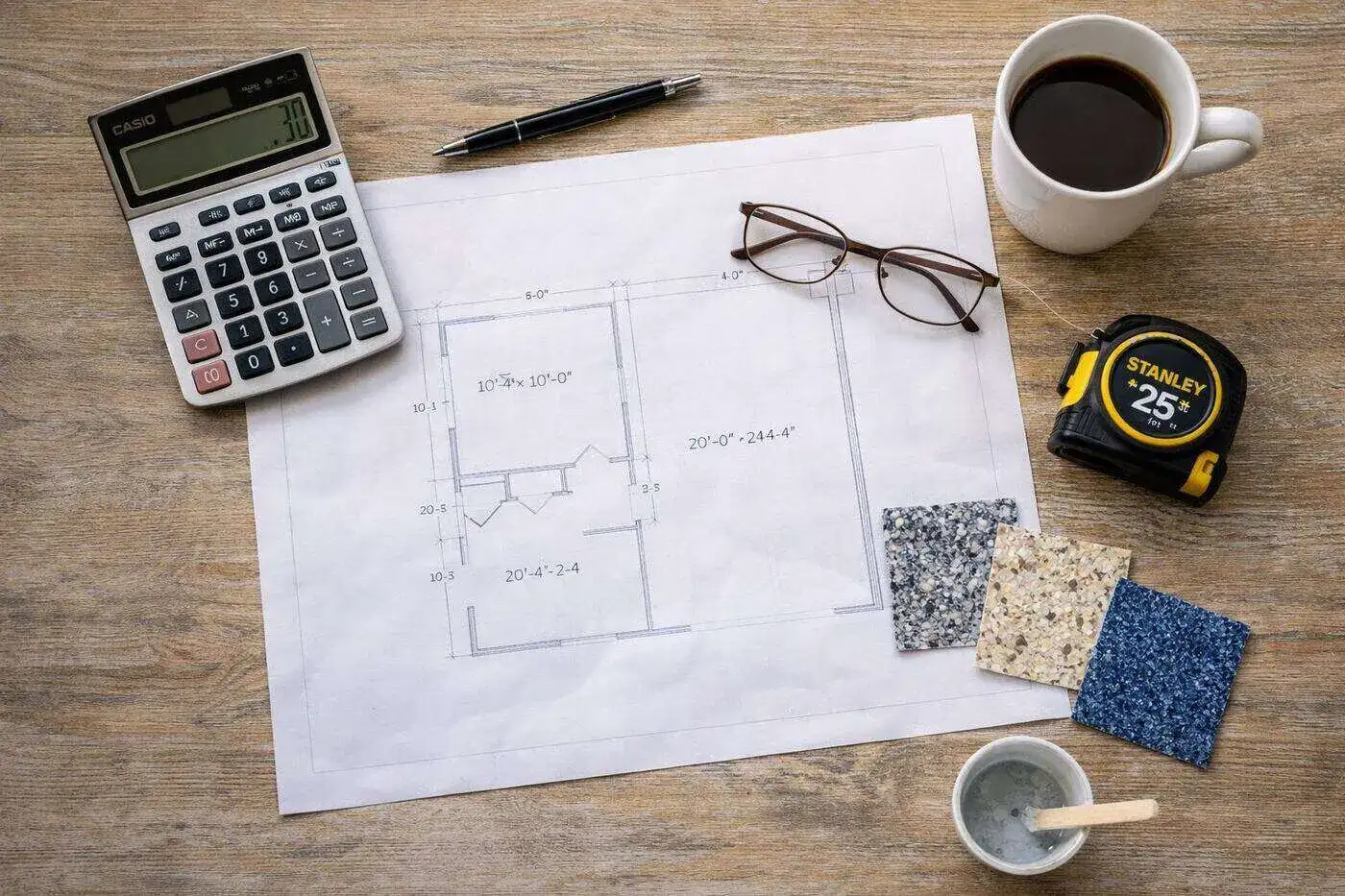
How Much Does Epoxy Flooring Cost in Palm Beach County? (2026 Guide)
Real prices by finish and a typical 2-car garage total.
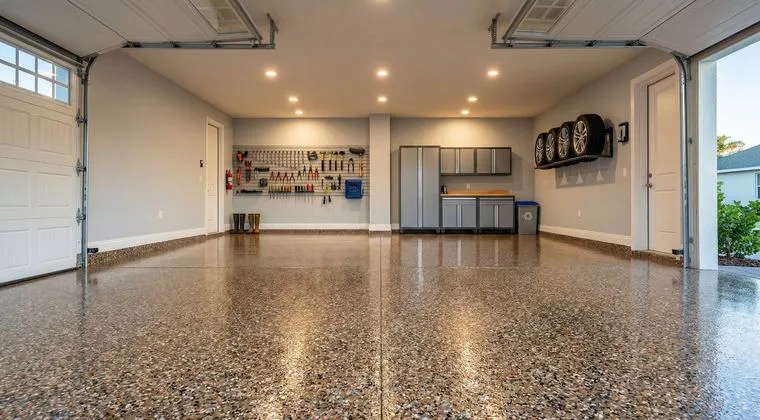
How Long Does an Epoxy Floor Last in Palm Beach County?
Realistic lifespans and what shortens them in South Florida.
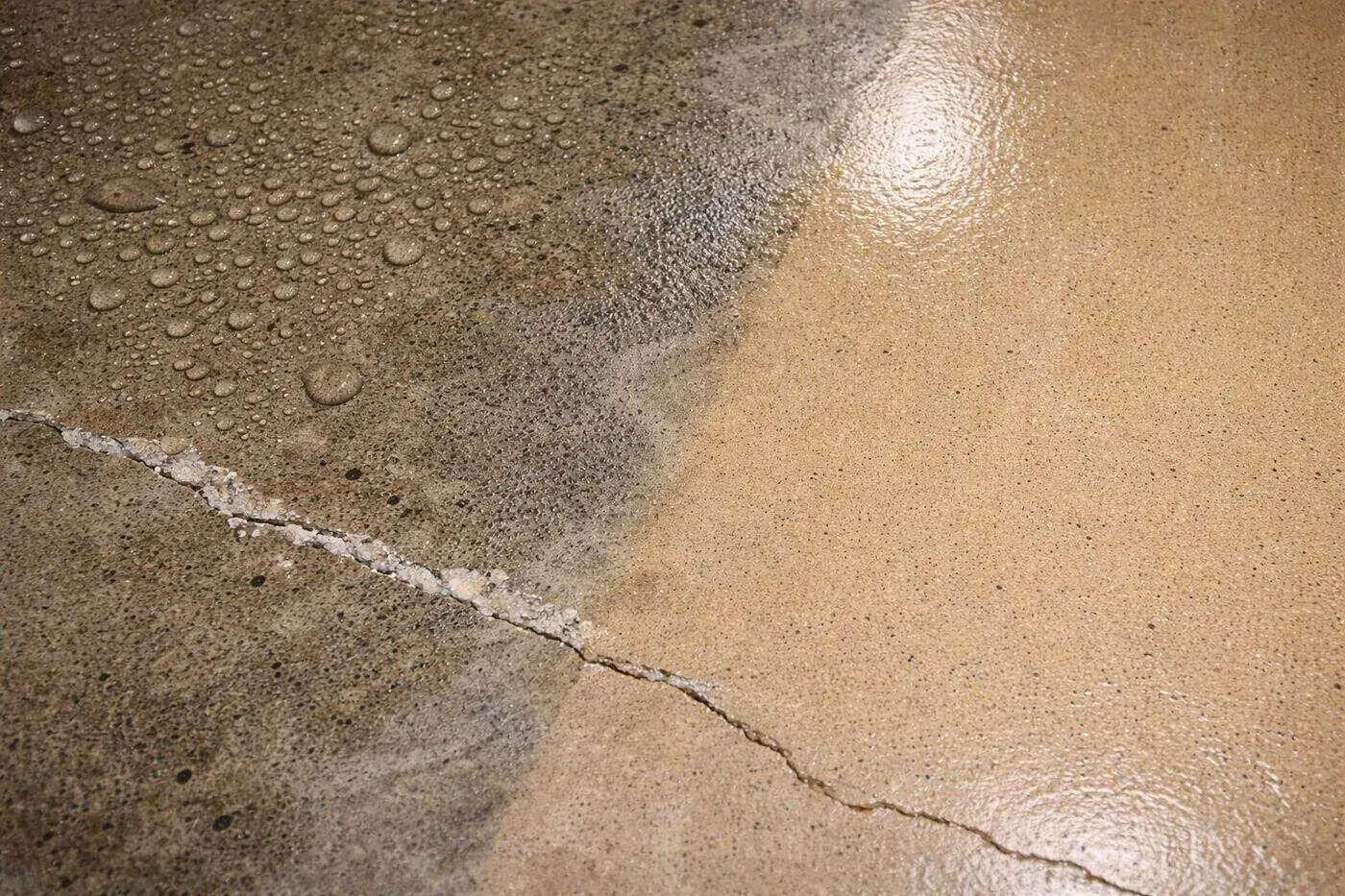
Why Epoxy Floors Fail in Palm Beach County — and the Moisture Test That Prevents It
The high water table, MVT testing, and what to ask before you sign.